Article
Project Incentives Reveal What the Agreement Actually Rewards
Contracts, validation rules, payment, and risk allocation show project teams which behavior the agreement actually rewards.
Published
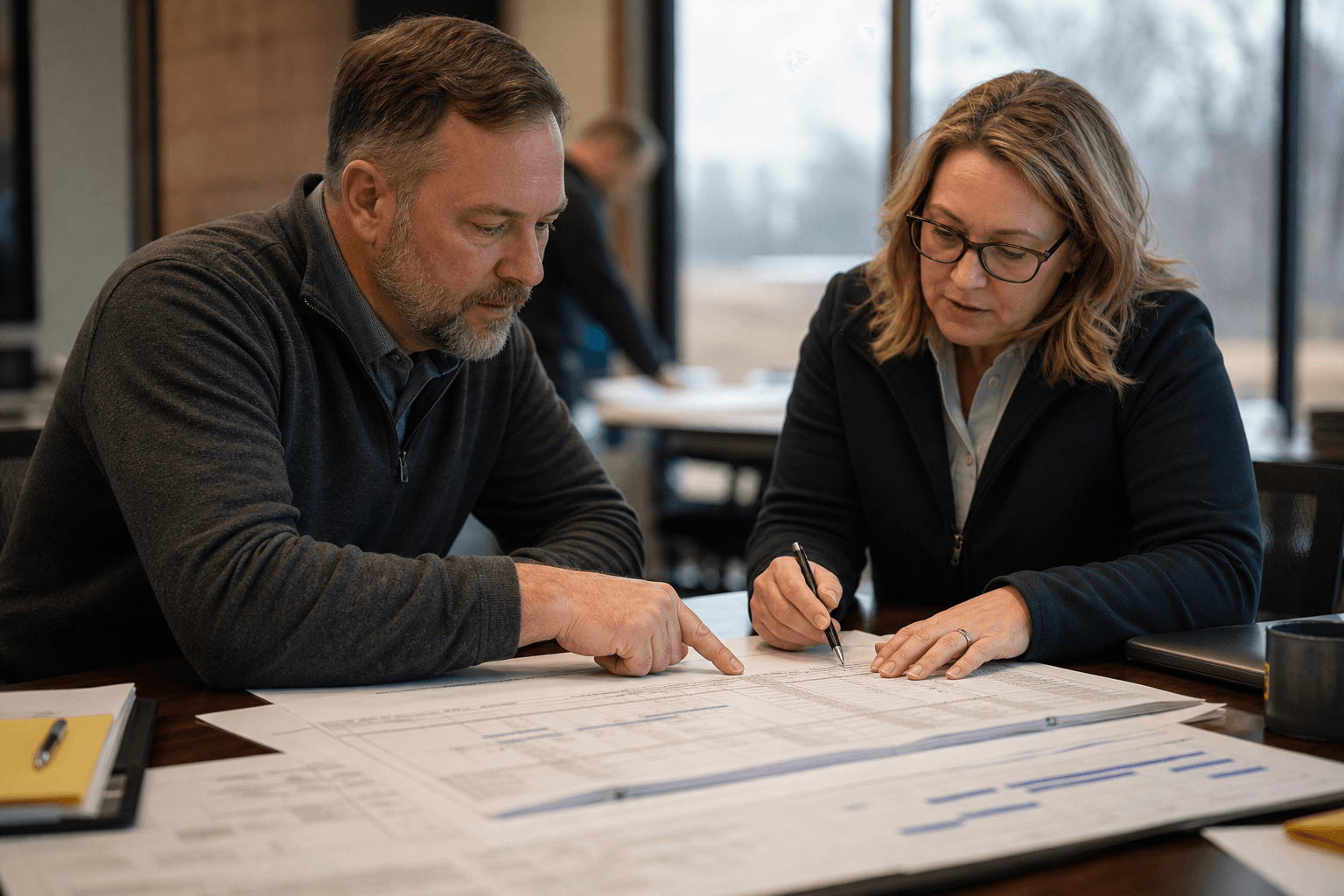
A project can ask people to collaborate while paying them to protect separate interests. When those messages conflict, the agreement usually wins.
In a 2020 Construction Shared Pains conversation with Sasha Reed, Nathan Wood, and Dan Smolilo, I discussed governance, validation, payment, contracts, and the owner's need for certainty. The discussion connected an abstract topic, blockchain, to a practical project question: what must be verified before money is released?
That question reaches beyond any particular technology.
Payment makes the operating rules visible
Every payment process contains a set of decisions. Someone defines what counts as acceptable work. Someone supplies evidence. Someone validates it. Someone approves the release of funds.
If those roles are unclear, a project can create delay even when the contract contains strong collaboration language. People will protect themselves because the path from work performed to payment received is uncertain.
Technology may make the sequence easier to track, but it does not decide what the parties consider sufficient evidence. That rule still comes from the agreement and the people responsible for administering it.
Early agreement matters more than a late correction
In the conversation, I noted that teams often fail to reach a deep agreement about what the project will move forward with before design and construction. The owner may see the design developing and realize it is not what they believed they were getting.
That is not only a communication problem. It is an incentive problem. If people are rewarded for advancing their own portion of the work before the shared definition is clear, progress can make the disagreement more expensive to resolve.
The answer is not a promise that one contract model will solve every project. Our discussion did not limit validation to one integrated form of agreement. Different structures can still create an early place to define the owner's program, expected evidence, schedule assumptions, and payment conditions.
Follow the risk as well as the money
Shared-risk language matters only when the operating rules carry it. Ask which party holds an uncertainty, who can influence it, and whether that party is rewarded for surfacing it early.
This review can reveal a mismatch. A trade partner may be expected to raise a problem while fearing that the information will delay payment. An owner may expect transparency while withholding a decision the team needs. A project manager may be accountable for a result without authority over the assumption driving it.
Choose one recurring payment or approval event. Write down the evidence required, the person who validates it, the person who approves it, and the risk each party still holds. If the sequence rewards silence or delay, the agreement may need a clearer rule before the team needs another tool.
The project gets the behavior its operating rules make reasonable. Collaboration becomes credible when the agreement, the validation process, and the money point in the same direction.
About the source conversation
This article is based on the 2020 Construction Shared Pains episode hosted by Sasha Reed, Nathan Wood, and Dan Smolilo with Brittanie Campbell-Turner. Listen to the original Follow the Money conversation.