Article
Clear Work Gives AI a Better Starting Point
When notes, decisions, and responsibilities are scattered, a faster answer does not fix the work. Choose one point where information changes hands and make the assignment easier to understand and check.
Published
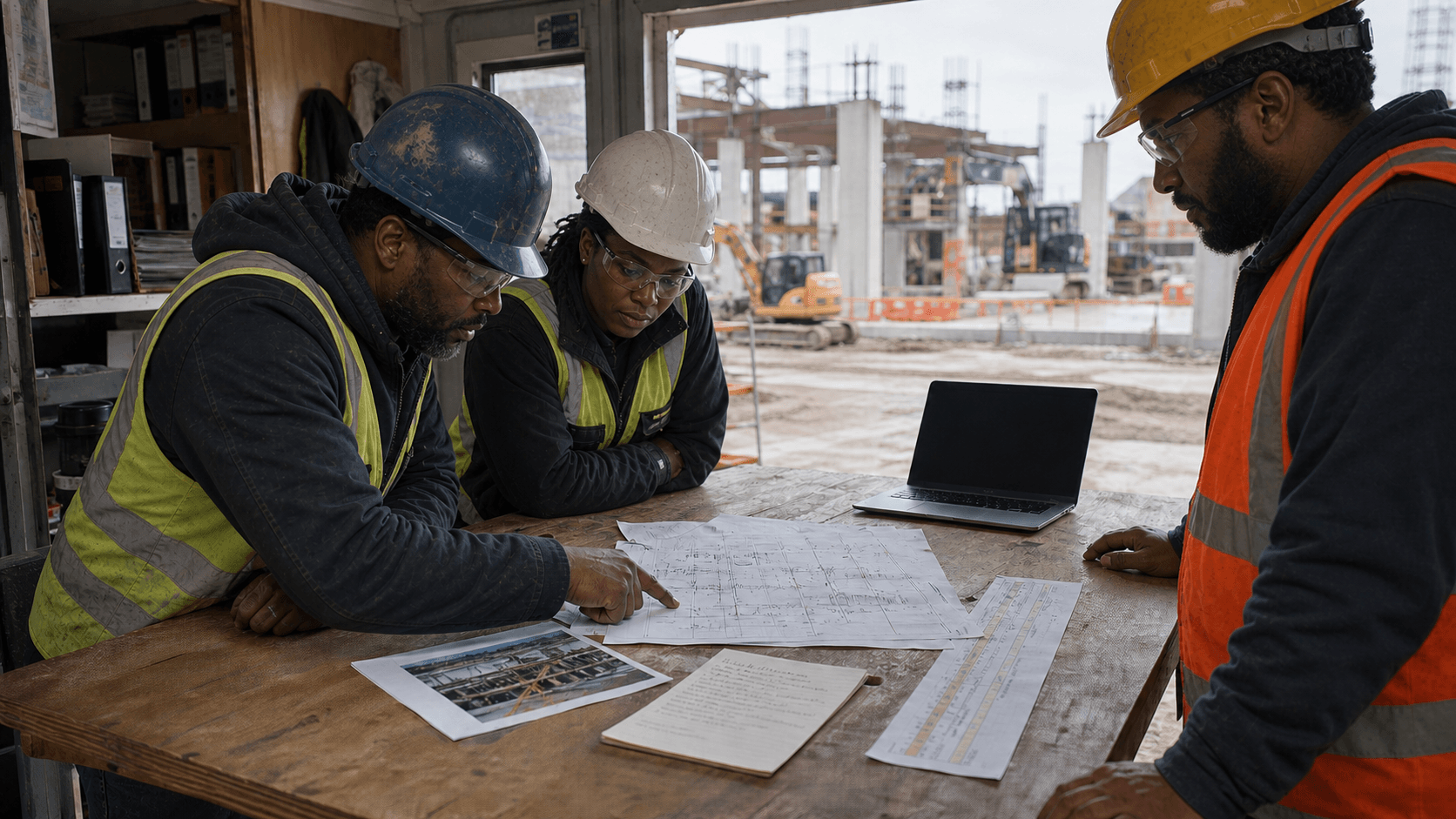
I have seen the same problem show up in two very different places: maintenance planning and AI use.
In both places, people want the work to move faster. In both places, speed only helps after the assignment is clear.
Earlier in my career, I worked at a nuclear power plant. We regularly brought the people involved in a maintenance activity together before the work started. That practice could reach all the way down to changing a light bulb. The team identified who needed to be involved, prepared a work package, planned the activity, and then carried it out.
That level of preparation may sound extreme for a small task. What stayed with me was the consistency it created. People knew what to expect. The team had a shared pattern to follow, even when someone was tired or the work became difficult.
When I later looked at construction and talked with construction professionals, I noticed how much the amount of early planning could vary from one organization to another. Sometimes the conversation that should have happened before the work began was skipped. The problem then appeared later as a scramble to decide what could be changed or cut.
AI does not remove that need for clear work. It can make the need easier to miss because it can return an answer before the team has settled the assignment.
The problem often begins before anyone opens the tool
Think about a point on a project where information changes hands.
A conversation becomes an action list. A field observation becomes a project update. A group of notes becomes a brief for someone who was not in the room.
At that point, the person receiving the work needs to understand a few basic things. What happened? What needs to happen next? Which information can be trusted? Who is responsible? What still needs a decision?
If those things are not clear, passing the information through AI may produce a cleaner document. It does not settle the questions for the team.
The answer can sound complete while the assignment underneath it remains unclear. That is the gap I want construction teams to notice. A polished answer and dependable work are not the same thing.
The problem is not always that the tool needs a better sentence. Sometimes the team needs a clearer understanding of the work before anyone asks the tool to help.
Give AI the clarity you would give a new team member
When a task moves to a new team member, a vague instruction gives that person a weak starting point. I use that same test with AI. I do not treat it like a search box. I ask how I would guide an assistant or an intern through the work.
You would not hand a new team member a pile of records and simply say, "Handle this."
You would explain the result you need. You would walk through the important steps. You would point out the places where the work often goes wrong. You would name the limits. If another person's perspective matters, you would make that clear too.
The same kind of direction gives AI a better starting point:
- What result are you trying to prepare?
- What information may be used?
- Whose perspective needs to be considered?
- What should not be assumed or decided?
- Who will check the result before anyone relies on it?
This is not about finding a magic phrase. It is about making the assignment visible enough for another person to inspect.
If two people on the same project answer those five questions differently, that is useful information. The disagreement may point to a project decision that needs attention before the AI request gets longer.
Clear source work makes review possible
I shared an example on The EBFC Show from work connected to the Lean Construction Institute's Respect for People Committee.
The committee had stories from a recorded session and wanted to explore what those stories could teach. I helped remove names and identifying details and summarize each person's story. I then asked AI to suggest five possible definitions based on the stories. I also asked it to group similar stories and help begin ideas for future learning material.
The order mattered.
The tool was not asked to invent what respect for people meant from nothing. It was given stories from the session. Those stories were summarized before they were compared. Multiple possible definitions were requested so the group was not handed one answer as if it were final.
Most important, the committee still decided what to do with the material. AI helped organize information and prepare options. It did not take ownership of the committee's meaning or its next decision.
That distinction applies to construction records too.
AI may help organize meeting notes, compare several accounts, or prepare a brief. The people responsible for the work still need to decide which records are current, whether something important is missing, and what action the project will take.
When the source work is visible, a reviewer can challenge the result. When the sources and instructions are hidden, the reviewer has to reconstruct the assignment before checking the answer.
A strong looking result can still be an experiment
I am enthusiastic about what these tools may help us build, but I have also had experiments fail.
I tried an early tool that was supposed to carry out a task on its own. I spent money on it, and it never completed the task. I had seen examples from other people, tried one of those uses for myself, and did not get the same result.
That failure was still useful. It showed me the distance between an interesting demonstration and a dependable way of working. I could take pieces of what I learned and continue testing, but I did not have to pretend the whole process was ready.
The same thing happened during the live demonstration on the podcast. One of the research tasks kept running in the background while we looked at a version I had prepared earlier. The delay was not a disaster. It was a reminder that real tools do not always behave like a finished demonstration.
That is why the first answer should remain easy to question, revise, or reject. The team needs a clear point where a person can say:
- the information is incomplete;
- the assignment was misunderstood;
- the answer used the wrong perspective;
- the result is not useful enough to continue;
- this decision belongs with someone else.
A stop point is part of the work. It gives the team a way to learn without turning every experiment into a project commitment.
Clear work does not mean writing more instructions
There is a temptation to solve weak AI results by adding more and more words. More instructions can help when important context is missing. They can also hide the fact that the team has not agreed on the task.
Clear work is simpler than that.
It means the team can explain what the work is for, what information supports it, where the limits are, and who decides what happens next.
For one information handoff, that may fit on a small work card:
Result: What should the next person be able to understand or do?
Starting information: Which notes, records, or observations may be used?
Missing information: What should be marked as unknown instead of guessed?
People: Who prepared the source material, who checks the draft, and who makes the decision?
Limits: What must the tool leave alone?
Stop point: What would make the team pause, correct the assignment, keep the work manual, or ask for deeper experience?
Those questions are useful with or without AI. That is a good test of whether the team is improving the work or only changing the tool.
Try one handoff and inspect what becomes clearer
If you want to test this approach, choose one low risk point where information moves from one person to another.
Use a recent, completed example so you can compare the draft with work the team already understands. Write the result, starting information, missing information, people, limits, and stop point before asking AI to help.
Then ask the tool to restate the assignment and identify what is missing. Do not ask it to produce the final draft yet.
Was its understanding correct? Did the exercise reveal a disagreement about the source, owner, or expected result?
If the assignment is clear, let the tool prepare a draft. Check whether it used only the material provided, kept unknowns visible, and made the next review easier.
If it did, you have a starting point you can improve. If it did not, correct the assignment, keep that work manual, or stop the test. All three are useful outcomes when they help the team see the work more clearly.
The goal is not to get AI into every handoff. The goal is to make one part of the work easier to understand, easier to check, and easier for the responsible person to decide.
Source conversation
This article draws from my appearance on The EBFC Show: Unlocking AI Innovations in Construction with Marcus Turner, published September 4, 2024.