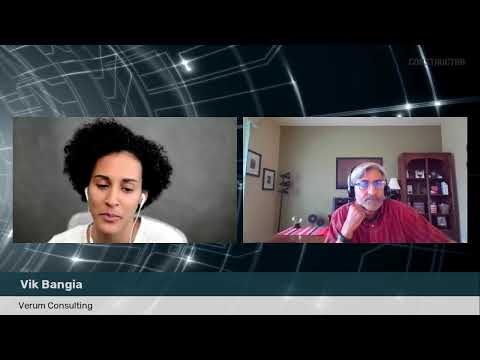
- Type
- Livestream replay
- Primary guest
- With Vik Bangia
Supporting Your Employees While You Return to Work
Watch the recording
A Return-to-Work Plan Is Incomplete Without Employee Voice
By Brittanie Campbell-Turner
Published on Constructrr
In May 2021, I asked corporate real estate strategist Vik Bangia how employers could support employee mental health as people returned to the workplace. The details belonged to that moment: changing mask guidance, vaccination questions, hybrid work, and office reopening plans. Vik kept separating physical readiness from psychological safety.
That distinction gives the conversation its purpose. A company can prepare a building for people without preparing the organization to hear them. A useful plan has to do both.
Physical safety is only part of the plan
Vik Bangia said many reopening plans he had seen were technical. They described physical safety but did not give employee mental health the same attention.
In his 2021 framing, psychological safety meant that people could raise fears or concerns about returning to the office in an open and respectful setting. The company then had a responsibility to respond and communicate what it would do.
A workplace can publish entry rules and cleaning steps without answering what happens when an employee is afraid, overwhelmed, or unsure that the plan fits their situation. The missing piece is not another instruction. It is a clear path from the concern to a responsible response.
One message cannot explain every person's situation
Vik Bangia warned leaders against covering a year of disruption with one general statement that everyone had been through a difficult time. He said people had disrupted their entire lives and that leaders needed to understand each individual's situation and what that person had gone through.
His point was that a general message could not reach what happened to people individually. Leaders needed to understand what each person had gone through before deciding how the organization could accommodate its workforce. Later in the conversation, Vik said the plan should include the employee's voice instead of moving only from executives down.
A companywide message can set the tone. It cannot tell a manager what one person is carrying into the day. The plan needs a way for that person to speak, a person responsible for listening, and a response that does not treat the concern as resistance by default.
Data should explain conditions, not make the whole decision
Vik Bangia described several workplace technologies being discussed in 2021, including entry kiosks, air monitoring, badge sensors, and wellness tools. He saw reporting as a way to show employees what a system observed and how the workplace was being managed.
He also said leaders could not force those tools into an organization and make decisions from data alone. The information had to connect to the company's culture and the way its people actually worked.
That limit matters. A reading can show temperature, air quality, or building use. It cannot tell a leader whether an employee feels heard or whether the response solved the concern. Data can make a condition visible. People still have to decide what the condition means and what should change.
The plan needs an owner and a way to change
Vik Bangia brought the conversation back to communication, employee voice, and responsibility. He described the plan as something that “should be a living document.”
In the structure Vik described, facilities management and security handled behavior inside the physical workplace, while human resources handled policy and disciplinary questions. The exact roles will differ by organization. The important part is making responsibility visible: one person receives the concern, another decision may be needed, and someone updates the plan when the response changes how the workplace should operate.
A practical review can start with one concern that came up during a workplace change. Trace where it was raised, who answered, what information was shared, and whether the plan changed. If the path stops, name the person who should own the next response and review what happens when the process is used again.
A workplace plan cannot support people by treating their concerns as a line after the building checklist. It becomes useful when people can see how to speak up, who will respond, and how the plan can change. That is the difference between opening the doors and being ready for the people who walk through them.
Recording information
People, topics, and original sources for this recording and article.
At a glance
- Original source date
- People
- Vik Bangia, Corporate real estate strategy expert, author, keynote speaker, future-of-work advocate, and CEO of Verum Consulting and OutsourceUSA at the time of the livestream