- Type
- Livestream replay
- Primary guest
- With Derek Gaunt
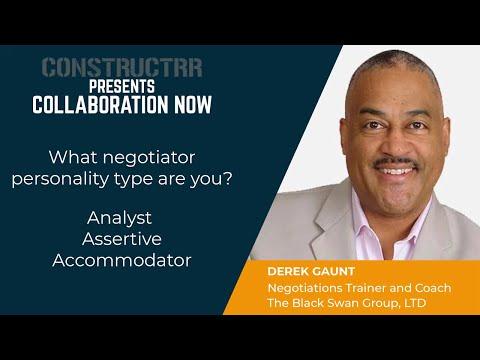
Collaboration NOW: What Negotiator Personality Type are YOU?
Watch the recording
Negotiation Styles Are Working Guesses, Not Fixed Labels
By Brittanie Campbell-Turner
Published on Constructrr
In an April 2021 Constructrr livestream, I asked negotiation trainer and coach Derek Gaunt how negotiator personality types could help people prepare for difficult conversations. A project conversation can sound productive and still lose momentum when everyone leaves the room. The discussion feels warm. The yes comes quickly. Then the next step never arrives.
Derek's three-type framework works best here as a preparation tool, not a way to place people in boxes. The point is to notice what pressure does to a conversation, then adjust how you listen, ask, and follow up.
The framework starts with pressure, not identity
Derek Gaunt narrowed more complex conflict models to three defaults: assertive, analyst, and accommodator. He was clear that the model did not describe a whole person throughout the day. It described the behavior that may surface when someone feels threatened, attacked, or deeply invested in the outcome.
That distinction matters. A fixed label invites overconfidence. A pressure default gives the team a working question: what is this person trying to protect as the stakes rise?
In Derek's framing, an assertive person wants to be heard and respected, an analyst wants data and information, and an accommodator wants to preserve the relationship in the moment. None of those priorities is automatically wrong. The risk comes when people assume everyone in the conversation is protecting the same thing.
A yes still needs an implementation plan
Derek warned that quick agreement can hide weak follow-through. Within his framework, someone who wants to preserve the relationship in the moment may say yes without a clear commitment to carry the work. The room feels productive, but the commitment weakens later.
Derek recommended implementation questions as the conversation unfolds. What happens next? Who else needs to weigh in? What will happen if the work moves off track? The answers make ownership and follow-through visible before anyone treats the agreement as settled.
During the livestream, I connected that practice to conditions of satisfaction. The person responsible for the work repeats what they understand, and the requester confirms whether the proposed result will meet the need. A meeting note can record a yes while the handoff remains vague. The agreement becomes more useful when the next action, owner, and recovery path are clear.
Tone changes what the other person can hear
Derek Gaunt also focused on tone. An assertive speaker may experience directness as efficiency, while someone else experiences the same delivery as aggression. He explained that once the other person feels attacked, they may stop processing the argument and begin reacting to the delivery.
He recommended an accusation audit, which means naming likely negative assumptions before they go unspoken. An analyst might explain that silence means they are thinking, not disengaging. An animated speaker might explain that a forceful delivery is not meant to intimidate and invite the other person to say when it becomes too much.
The point is not to make the conversation softer or less honest. It is to keep the exchange clear enough for both sides to think and share useful information.
Treat the label as a test, not a verdict
Derek added the most important limit himself. He described any first read as tentative and shared an example of a long relationship in which his team still misread someone's default.
That changes the job of the label. The useful move is not to sort people quickly and become certain. It is to form a working guess, watch how the person responds, and revise the guess when the conversation supplies better evidence.
If this pattern is familiar, choose a recurring conversation where agreement weakens after the meeting. Before the next discussion, note the negative assumptions the other person may already have, prepare an implementation question, and watch what they seem to protect when pressure rises. Afterward, compare your first read with what actually happened.
The label is not the decision. It is a prompt to listen, prepare, and revise. Derek's instruction was direct: “Make your best guess, test that guess.”
Recording information
People, topics, and original sources for this recording and article.
At a glance
- Original source date
- People
- Derek Gaunt, Negotiation trainer and coach; author