Article
AI Can Support Organizational Memory
AI can help people find and reuse recorded knowledge, but organizations still need context, source ownership, review, and human relationships.
Published
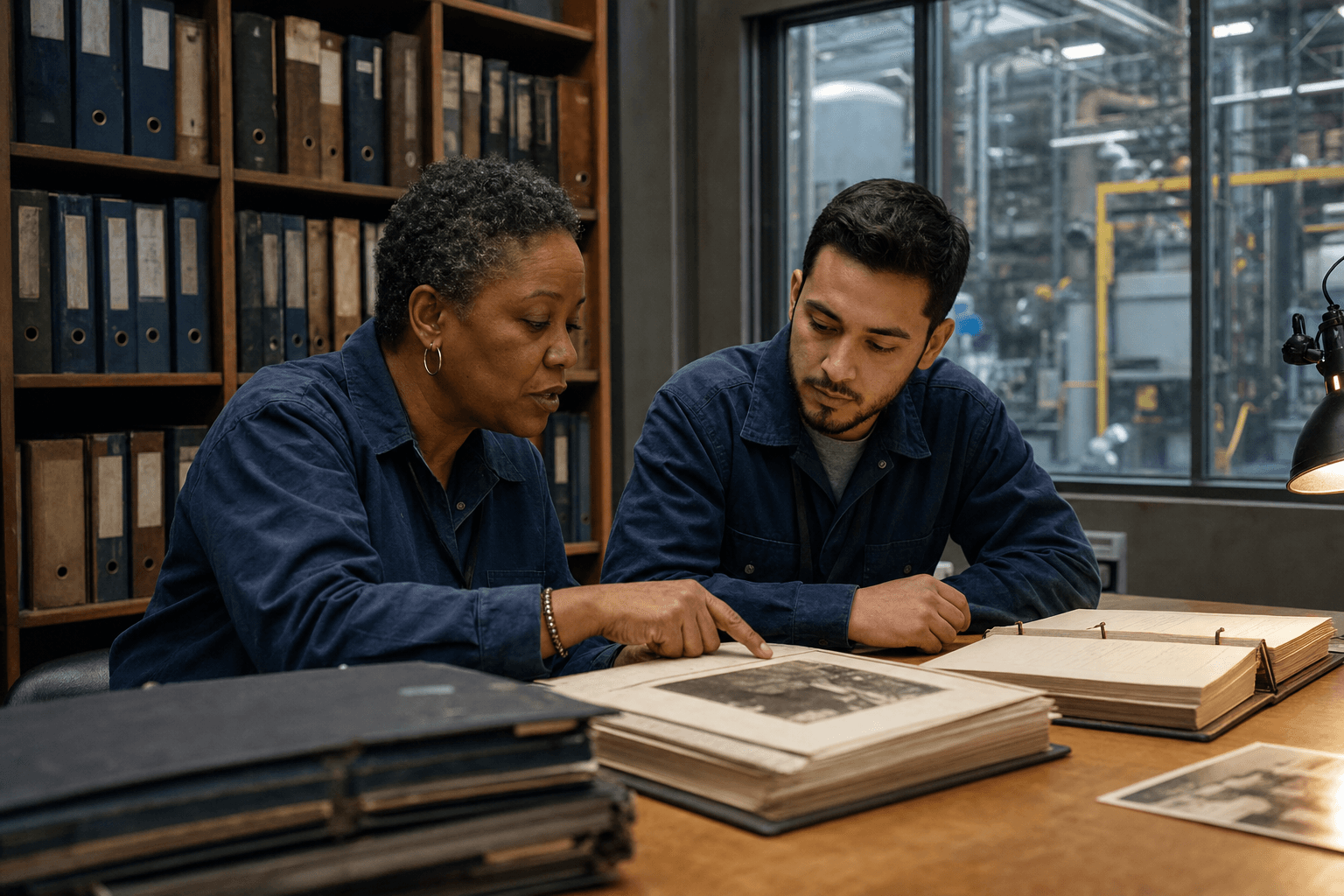
My interest in knowledge sharing started long before generative AI.
As a young person, programs such as the Urban League and Project Alpha gave me access to adults who shared their experience and helped me see possibilities I could not have reached alone.
Later, while working at a nuclear power plant, I used an industry database to search operating experience from other plants. That resource made lessons from someone else's problem available before we had to learn the same lesson ourselves.
Those experiences shaped how I think about organizational memory.
The goal is not to collect more documents. It is to help the right person find useful experience in time to make a decision.
Knowledge leaves in more than one way
Organizations often talk about knowledge loss when an experienced employee retires or leaves.
Knowledge can also disappear while the person is still there.
It may remain in a private inbox, a project folder no one searches, a story told only in one meeting, or a decision recorded without the reason behind it.
The visible record survives. The context does not.
This creates repeated work. People search for the same answer, rebuild a decision history, or repeat a mistake because the earlier lesson was not connected to the new situation.
AI can improve retrieval and synthesis
AI can help search across approved sources, summarize related records, identify patterns, and draft an answer that points people back to the original material.
For example, a new project engineer might ask:
What should I review before releasing this type of equipment package?
A useful system could find the current procedure, relevant checklist, recent lessons learned, and examples from similar work. It could organize them around the question and identify where the sources disagree.
The result becomes a starting point for a conversation, not a substitute for the experienced person or the governing procedure.
Tacit knowledge needs people
Some knowledge is difficult to capture because it depends on judgment, relationships, timing, and signals that were never written down.
An experienced superintendent may notice that a handoff is likely to fail because of how several small conditions interact. A database can hold the conditions. A model can surface related patterns. The person still brings context and accountability.
Organizations should be careful not to treat AI as a way to extract everything from experienced workers and then remove them from the loop.
The better use is to make their knowledge easier to carry, challenge, and teach.
Preserve the reason behind the answer
A useful knowledge record should include more than a conclusion.
When the work supports it, capture:
- the question or decision;
- the conditions at the time;
- the sources considered;
- the option selected;
- the reason for the choice;
- the person responsible;
- what happened next;
- when the guidance should be reviewed.
AI can help structure and retrieve that record. The people involved should confirm that it represents what happened.
Start with one recurring question
Choose one question that people repeatedly ask an experienced colleague.
Collect the approved sources that person actually uses. Ask them to explain what the records miss, when the standard answer does not apply, and which signs cause them to escalate.
Then test whether AI can help another employee reach the right sources and ask a better follow-up question.
The measure is not whether the system answers instantly. It is whether the employee reaches a responsible next decision with less lost context.
AI will play a role in knowledge management. The organizations that benefit will treat it as support for human learning and organizational memory, not a replacement for the people who create both.
Editorial disclosure: This adaptation and its representative image were developed with AI-assisted editorial and visual production, then reviewed and approved by Marcus Turner.