- Type
- Livestream replay
- Primary guest
- With Anthony Varie
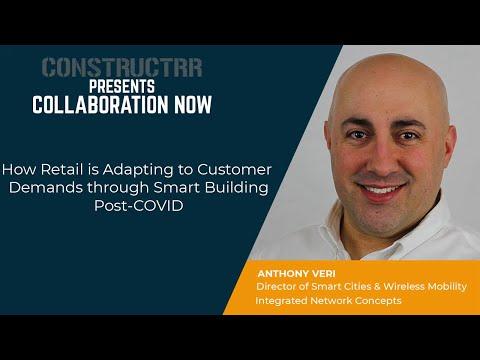
How Retail is Adapting to Customer Demands through Smart Building
Watch the recording
Smart Building Investments Need a Plan for Proof
By Brittanie Campbell-Turner
Published on Constructrr
“What are you trying to solve? What's your business case?” Anthony Varie asked near the close of the April 30, 2021 Constructrr livestream.
That question gives a smart-building decision a starting point and a finish line. The team has to name the operating problem before selecting a solution, then decide what evidence will show whether the installed system is doing the work it was purchased to do.
Installation is not the finish line
In that 2021 livestream, I called validation critical after Anthony Varie described health and air-quality products that could be accepted on marketing claims without proof of how they performed in the installed environment. The products and validation concern were part of that pandemic-era discussion.
Anthony discussed engineering conditions, ongoing operating cost, sensor calibration, and whether the resulting data could be trusted. His examples were specific to the products and concerns being discussed in 2021. The broader purchasing discipline is to define the performance check before treating installation as success.
When an audience question turned to indoor-air-quality sensors, Anthony Varie warned that an uncalibrated sensor could produce wrong data. He recommended reliable equipment and validation over time. He also said visible performance information could keep the building team honest when a system was not working as expected.
Real-time reporting is therefore not proof by itself. The owner still needs to know where the reading came from, whether the sensor is working correctly, and what response the reading should trigger.
Connectivity can change the scope of the decision
Anthony Varie described a retail client that began with older HVAC equipment and then needed internet connectivity for building controls and maintenance information. From there, the client considered tenant connectivity, parking data, and other uses. Anthony said he would use feasibility studies to determine whether particular options made economic sense.
That client example cannot tell every retail owner what return to expect. It shows how one building upgrade can reveal shared infrastructure that several operating decisions depend on. Each use still needs its own purpose and case.
Write the proof plan before comparing solutions
Return to Anthony's two questions. Write down the operating problem and the business case for one proposed building technology. Then name the performance data, the person who will review it after installation, and the condition that would lead the team to adjust the system.
This short plan does not guarantee that the investment will work. It gives the owner a way to compare a product promise with an observable result.
A building is not smart because it contains more technology. The useful test is whether the owner can explain the problem, read trustworthy performance data, and decide what to change after installation.
Recording information
People, topics, and original sources for this recording and article.
At a glance
- Original source date
- People
- Anthony Varie, Director of smart cities and wireless mobility; smart-city and smart-building speaker and consultant